

DESIGN-BUILD · INDUSTRIAL
Industrial HVAC design-build for plants that can't stop
Process heating, cooling, dehumidification, and heat recovery — engineered around the uptime constraints of food, pharma, manufacturing, and indoor agriculture.
- 0+
- Certified specialistsEngineers, technologists, and certified pros — LEED, CEM, CMVP, RCx, RBQ, CMMTQ.
- 0+
- Projects deliveredAcross commercial, industrial, and institutional sites in Canada since 1927.
- $0M
- Grants secured for clientsÉcoPerformance, Énergir, Hydro-Québec and federal programs — including industrial decarbonization mandates.
What we deliver for industrial
Sub-segments we routinely run
Six industrial verticals where Kolostat has a documented mechanical track record — from agroalimentaire and agri-food, through manufacturing and pharma, to controlled-environment agriculture and cleanrooms.
Manufacturing and processing plants
Robust mechanical systems for working factories — sized around production tolerances, sequenced around the calendar that runs the line.
Food and beverage processing
Process cooling, ventilation, and piping engineered around the contamination, sanitation, and uptime constraints of food and beverage manufacturing.
Pharmaceutical manufacturing
Precision-controlled mechanical environments for pharmaceutical production — backed by preventive maintenance and a contracted response tier when something fails between visits.
Agri-food and agroalimentaire plants
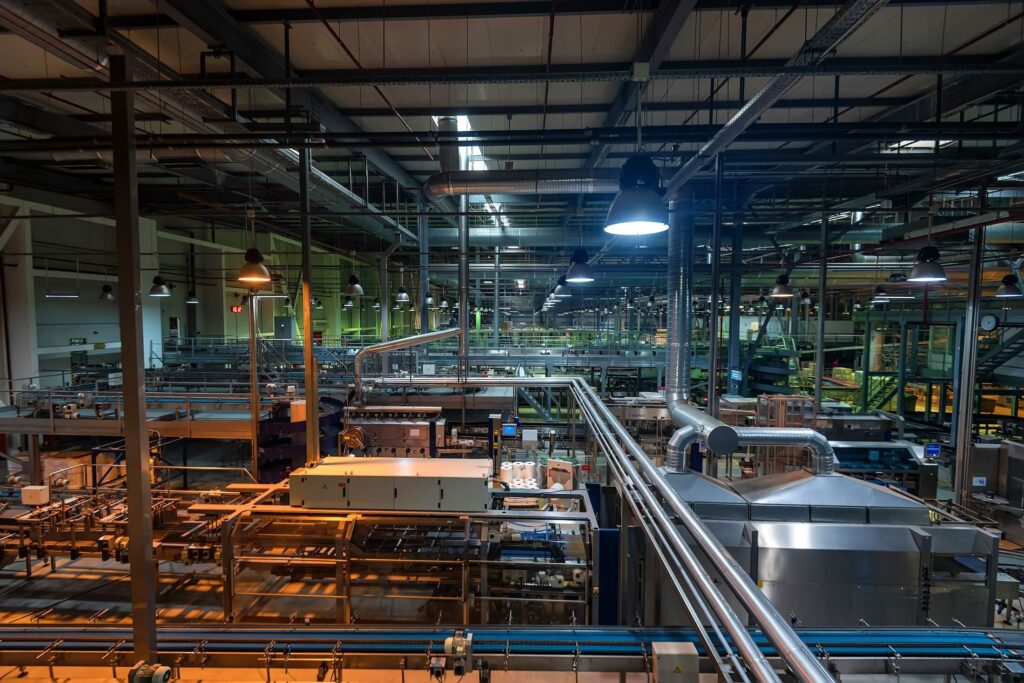
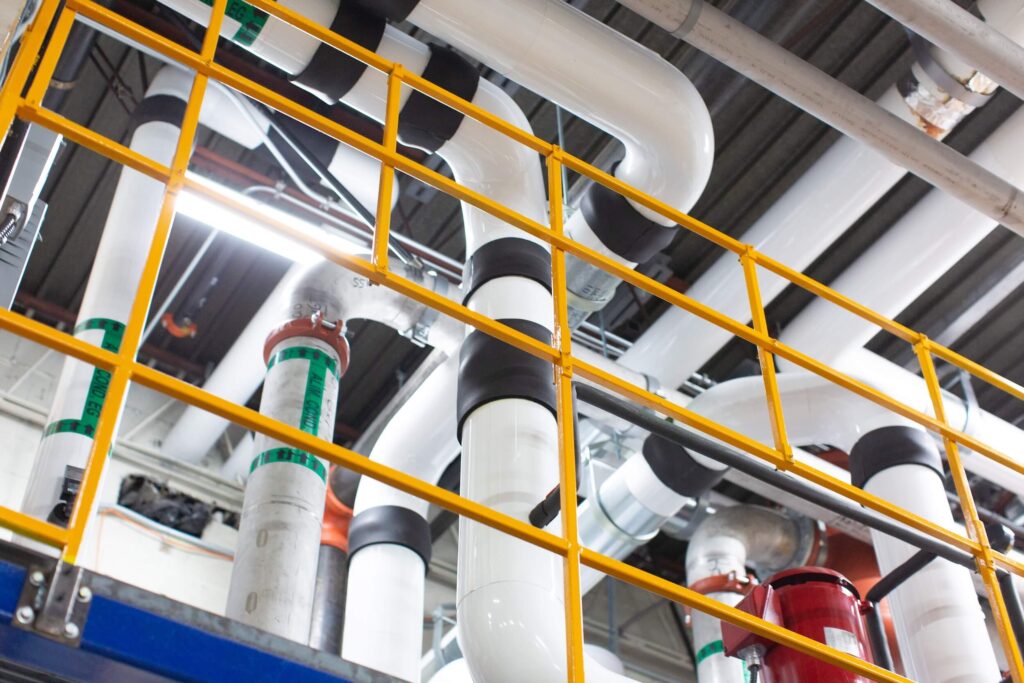
Mechanical scope for the agri-food and agroalimentaire sector — the segment shot for our design-build photography because the work is concentrated there.
Indoor farming and controlled-environment agriculture
Tight temperature, humidity, and CO₂ control with integrated heat recovery — engineered for predictable yields and lower operating energy.
Cleanrooms and process labs
Tight tolerances on temperature, humidity, pressure cascades, and air change rates — the constraints that make a mechanical system either pass validation or fail it.
Process heat and cooling
Engineered for uptime, not catalog defaults
Five mechanical disciplines that show up on every industrial scope — kept high-level here, with decarbonization detail on the dedicated service pages.
Process cooling, sized for continuous duty
Thermal systems engineered around the plant's real operating envelope — not catalog defaults — and designed to hold tolerance across the production schedule.
Waste heat recovery as a profit center
Industrial waste heat usually leaves the building. We re-route it — to make-up air, domestic hot water, an adjacent process, or a neighbouring building. Detail lives on the dedicated heat-recovery service.
Electrification with technological neutrality
Heat pumps, electric boilers, dual-energy systems where they fit — engineered, not prescribed. Decarbonization detail lives on its own service page.
Controls integrated with the process
Intelligent, real-time monitoring controls that detect anomalies before they become production interruptions — and tie into the BMS layer your operations team already uses.
Robust systems, built for production
Reliability, regulatory compliance, and reduced unplanned downtime — the same three constraints every industrial client ranks above first-cost.
Indoor farming / horticulture
Tight climate control for controlled-environment agriculture
Indoor farming sites demand rigorous management of temperature, humidity, and CO₂ to optimize yields. We pair that precision with heat recovery and proactive maintenance — the three pillars from our indoor-farming practice.
Temperature, humidity, and CO₂ — within tight tolerance
Rigorous management of the three variables that drive yield in a controlled-environment grow — held inside the operating envelope your agronomy team specified.
Heat recovery integrated into the design
Recovery loops sized into the mechanical scope from day one — reducing both operating cost and the carbon footprint of the produce.
Reliability and stability for a living crop
Proactive maintenance and predictive controls — because the environment has to be constant and predictable for the crop to actually grow.
How we work
Four steps from plant walk to commissioned line
Meet
Plant walk with a senior engineer — process loads, piping, contaminants, schedule. Free.
Visit
We measure existing conditions, loads, and constraints inside the operating envelope.
Diagnose
Engineering proposal with cost, shutdown plan, and grant eligibility quantified up front.
Build
Execution sequenced around your production calendar — commissioned with measurable performance handover.
Industrial FAQ
What plant managers ask first
Can you deliver on a production floor without stopping the line?
Yes — minimizing line shutdown is core to the engagement. Because we bring engineering, fabrication, install, and controls together in-house, we can sequence invasive work around your production calendar without impacting your process and operations. Where a scheduled shutdown is the right window, we plan the cutover to fit it. The integrated team is the reason design-build is the delivery model for plants that cannot afford a long mechanical shutdown.
How do you manage downtime risk during a retrofit?
Downtime risk is engineered out of the project, not insured against. We size systems for continuous duty, plan phased migrations where capacity has to stay above operating need, and pair the install with intelligent monitoring controls that detect anomalies before they become interruptions. For 24/7 plants, the cutover plan is reviewed alongside your operations team before any work is scheduled.
Do you work in food and pharma sanitation environments?
Yes. Food processing and pharmaceutical manufacturing are core industrial sub-sectors for Kolostat. Our technicians and engineers hold the CMMTQ and RBQ certifications required to deploy mechanical systems adapted to the strict constraints of these factories — and our preventive maintenance practice explicitly covers pharmaceutical and food clients alongside commercial, institutional, and data-centre sites.
Which grants apply to industrial HVAC measures?
ÉcoPerformance is the primary lever for industrial sites operating in Quebec — up to 75% of eligible project cost when the work reduces GHG emissions, with payback caps of 2 years (small/medium consumers) or 1 year (large consumers). Énergir, Hydro-Québec, and federal NRCan programs stack on top where applicable. Kolostat has secured roughly $59M in grants for clients in recent years and manages the full path from analysis filing to post-implementation reporting.
Do you design HVAC for pharmaceutical facilities?
Yes. Pharmaceutical manufacturing is a named sub-sector for our industrial practice. Our technicians and engineers hold the CMMTQ and RBQ certifications required to deploy mechanical systems adapted to the strict constraints of these factories. The mechanical scope on a pharma project — pressure cascades, air-change rates, filtration — is engineered around the regulated environment from the first design pass, in coordination with the owner's compliance and validation teams.
Can controls integrate with our process equipment and BMS?
Yes. Our controls practice ties HVAC into the same monitoring layer your operations team already uses — BMS-side via WebCTRL® where applicable, and process-side where the mechanical system has to respond to upstream production signals. Detail on the controls scope itself lives on the dedicated HVAC controls optimization service.
Request a quote
Tell us about your project
Submit right here — a Kolostat engineer will follow up to scope the work. Email or phone is required.
Get started
Have an industrial mechanical scope?
Tell us about the plant. A senior engineer will follow up with the next step. RBQ-licensed (1269-6704-94), CMMTQ-certified.