




Insights · Decarbonization · October 22, 2025
Energy loops: All for one and one for all!
Daniel Robert explores how energy loops — district thermal networks that pool heating and cooling across neighbourhoods — can decarbonize Quebec's cities and industrial zones at lower cost, with concrete examples from Montreal, Gatineau, Sherbrooke and Toronto.
This article is written by Daniel Robert, Senior Vice President, Special Projects, and was published in GESTION IMMOBILIÈRE magazine. To read the full article in the magazine, you can access it via the following link: Gestion immobilière – N°3 – September 2025
In the fall of 2024, Énergir published a very interesting article on a concept that, in my opinion, will become increasingly prevalent in Quebec: energy loops. This text is inspired by that article, and presents examples of concrete projects that make the most of waste heat in urban and industrial environments.
At a time when reducing greenhouse gas (GHG) emissions and making the most of waste heat to optimize electricity consumption have become priorities, energy loops appear to be a promising solution.
What is an energy loop?
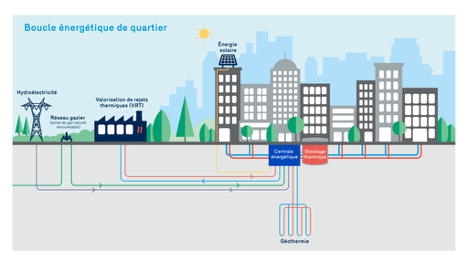
Within the same district or sector, an energy loop is an energy distribution network capable of providing heating and cooling services.
This type of network helps us achieve our societal decarbonization targets at a lower cost, as economies of scale are achieved on the energy sources that supply district heating plants. Energy loops can be powered by geothermal energy, solar energy, waste heat recovery (WHR), which recovers excess heat from an exothermal plant to heat neighboring buildings, or any other available renewable energy source. Peak demand can be met by renewable natural gas, combined with thermal storage strategies to reduce GHG impact.
There are many successful examples of energy loops in Quebec and Canada. Here are just a few:
- Today, ÉCCU (formerly CCUM) manages one of the largest district heating and cooling networks in Canada. With three separate underground networks for hot water, steam and air conditioning, ÉCCU supplies nearly 2 million square meters of mixed-use buildings in downtown Montreal. With nearly $10 million in assistance from the Quebec government, ÉCCU now produces hot water and steam from renewable energy sources. This investment allows the decarbonization of a major part of the downtown area at lower cost, since all users benefit from significant economies of scale.
- The Zibi energy loop in Gatineau is another example of a thermal network that will eventually supply more than 2.4 million square meters of multi-use buildings, using waste from the Kruger plant for heating and the nearby Ottawa River for waste during the warm season.
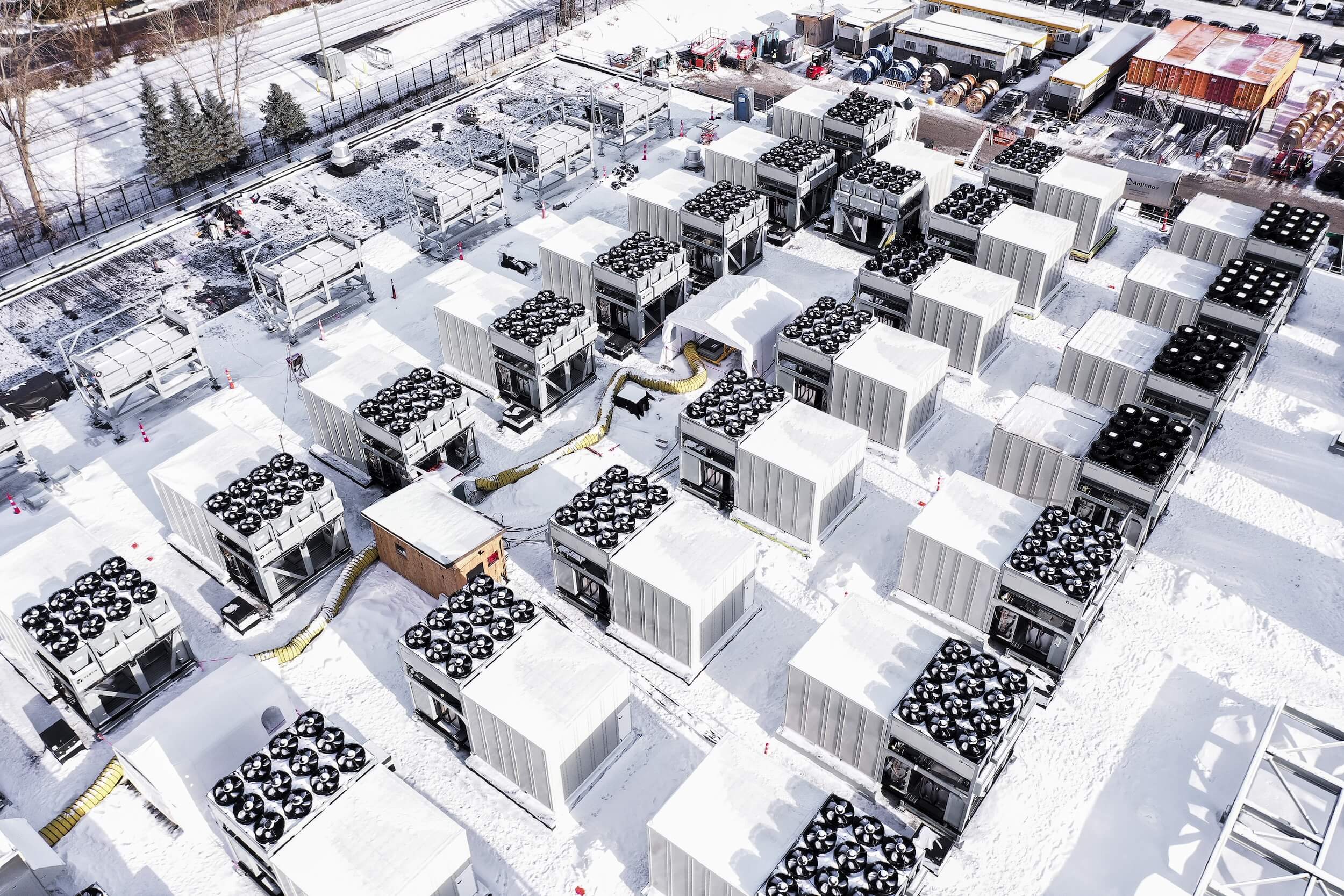
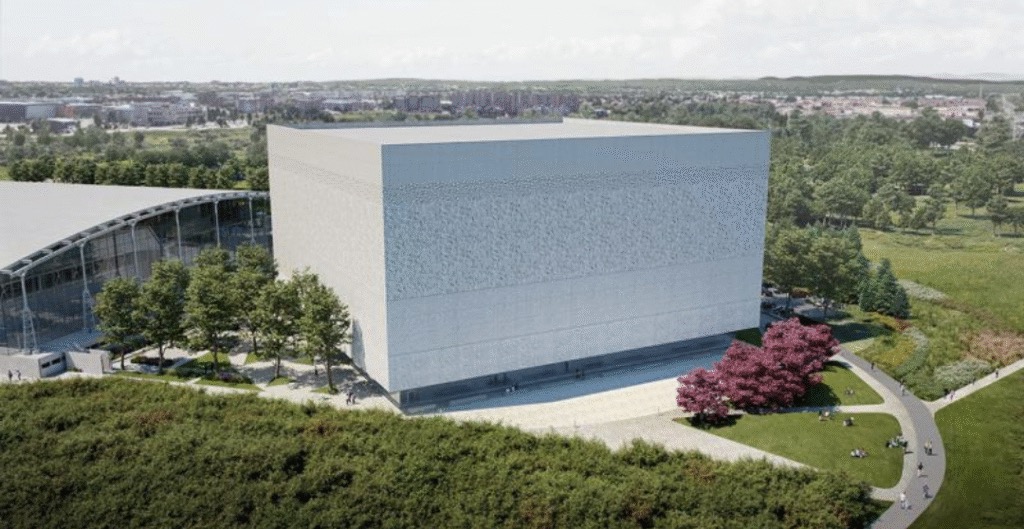
- As part of the Humano District project, the Université de Sherbrooke is using an energy loop system to recover waste heat from its hybrid quantum computing center. The system recovers heat to heat buildings, including residential units and a former convent, depending on the season.
- Toronto's district heating and cooling network, managed by Enwave, is a unique system that uses cold water from Lake Ontario to cool downtown buildings. The system draws cold water from 83 m deep in Lake Ontario, 5 km from shore, and has reduced chiller electricity consumption by 90% and saved 714 million liters of water by eliminating water towers. Seventy-five buildings in downtown Toronto are currently connected to this high-performance system.
- Of course, there are many other examples right here in Montreal: Espace Montmorency built by Montoni and the Technopôle Angus eco-district, to name but two.
What are the main benefits of energy loops?
Energy loops are of major interest to municipalities in urban areas and users in industrial zones. By centralizing heating and cooling systems, they reduce GHG emissions, helping to improve air quality, optimize water consumption and achieve decarbonization objectives. What's more, by minimizing heat release into the atmosphere, they help mitigate urban heat islands, improving people's comfort, particularly during the summer months. Finally, these infrastructures are part of the energy transition, supporting the sustainable economy while helping to achieve the environmental targets set by local, provincial and federal authorities.
What are the key success factors for energy loops?
One of the key criteria for the success of an energy loop is urban density, or the proximity of two entities with complementary energy needs, such as greenhouses and an aluminum smelter. Indeed, a certain volume of energy is required per metre of network deployed in order to make the centralized energy infrastructure profitable.
The success of a loop project also depends on the mix of uses within a district or sector. Taking advantage of variations in the energy needs of different buildings is not only energy-efficient, but also economically advantageous: waste heat from buildings and industries provides free thermal energy, and its recovery gives rise to a circular economy model, since the output of one can become the input of another.
With the right planning and a strong political will, Quebec has everything it takes to become a leader in energy loops and urban energy networks. However, for these projects to see the light of day, an integrated approach involving all stakeholders upstream is definitely the way forward. Real estate developers need to adapt their construction practices to encourage the integration of centralized and renewable energy sources, in order to improve the environmental performance of their projects.
All for one and one for all!
Note: Those wishing to find out more on the subject can consult the document Opportunities and regulations favoring the deployment of energy loops, drawn up by the Energy and Buildings Network. The Alliance for Decarbonation of Buildings has also launched a national study on the potential of energy loops; to find out more about the project, follow the link: https://buildingdecarbonization.ca/fr/boucles-energetiques/
References: — Article by Énergir: https://combeq.qc.ca/2024/12/10/les-boucles-energetiques-une-solution-gagnante/ — Article by Gestion immobilière: https://jbcmediakiosk.milibris.com/reader/b389d544-4734-4814-91ad-f8ad61c9365b?origin=%2Fgestion-immobiliere%2Fgestion-immobiliere%2Fn3-2025